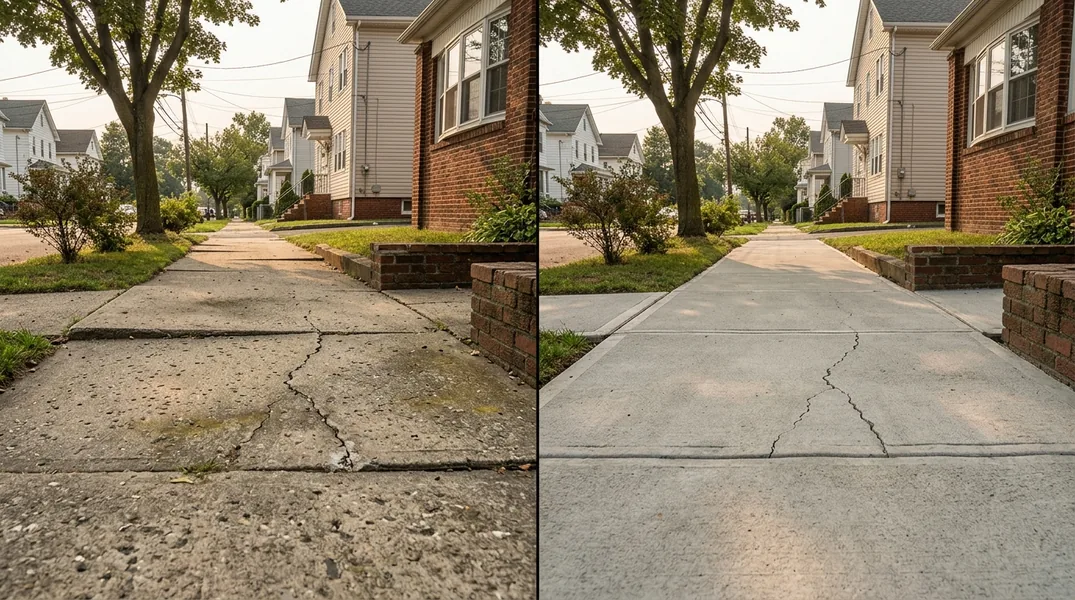
Understanding Freeze-Thaw Damage in Paterson Winters
If you own a home or business in Paterson, you know that winter brings more than just snow and ice. It brings a relentless cycle of freezing and thawing that can devastate concrete surfaces. Freeze-thaw damage occurs when water seeps into tiny pores and cracks in your concrete, then freezes when temperatures drop. As water expands during freezing, it exerts tremendous pressure on the surrounding concrete, forcing it outward and causing cracks to spread and widen.
This cycle repeats throughout the winter season, with each freeze-thaw event making existing damage progressively worse. What might start as a hairline crack in November can become a significant structural problem by March. The problem is particularly severe in Paterson because our region experiences frequent temperature fluctuations, especially during late fall and early spring when temperatures hover around the freezing point. These conditions create the perfect storm for concrete deterioration, as the concrete experiences multiple freeze-thaw cycles rather than prolonged cold weather that would simply keep everything frozen solid.
Road Salt Scaling: The Double Damage Problem
Beyond freeze-thaw cycles, road salt poses another serious threat to your concrete surfaces. Municipalities, including those in the Paterson area, apply salt to roads and sidewalks to improve traction during winter months. While this practice is necessary for safety, the salt inevitably finds its way onto your driveway, patio, and surrounding concrete. When salt combines with the freeze-thaw cycle, it accelerates concrete deterioration in a process called scaling.
Scaling occurs when the top layer of concrete begins to flake, peel, or chip away. Road salt lowers the freezing point of water, allowing moisture to penetrate deeper into the concrete before freezing. This creates a more intense expansion force within the concrete structure. Additionally, salt crystals can form within the pores of the concrete, and these crystals expand as temperatures change, further fragmenting the material from the inside out. Homeowners often notice scaling as a rough, pitted surface or visible chunks missing from the top layer of their concrete. Unlike freeze-thaw cracks that run deep into the structure, scaling typically affects the surface, but if left unaddressed, it can eventually compromise the entire slab.
Why Paterson's Climate Creates the Perfect Conditions for Concrete Damage
The Paterson area sits in a climate zone that is particularly challenging for concrete longevity. Our winters are cold enough to freeze water reliably, but our spring and fall seasons bring temperature swings that can shift by 20 to 30 degrees in a single day. This unpredictability means your concrete never gets a true break. A warm afternoon might thaw surface moisture, only for temperatures to plummet that evening, creating another freeze-thaw cycle. Over the course of a winter season, this pattern repeats dozens of times, each cycle weakening the concrete structure incrementally.
The proximity to major roads and highways also means that salt spray and runoff from treated surfaces reach residential driveways more readily than in areas further from transportation corridors. Combine this with the salt applied directly to local streets and parking areas, and homeowners in Paterson face a compounded assault on their concrete surfaces. Even well-constructed concrete that might last 30 to 40 years in a milder climate can show significant damage within 10 to 15 years in our region without proper protection and maintenance.
Recognizing Early Signs of Freeze-Thaw and Salt Damage
Early detection of freeze-thaw and salt damage can save you thousands of dollars in repairs. The first signs are often subtle. Look for hairline cracks that seem to appear overnight or expand visibly from one season to the next. These cracks typically follow a pattern, often branching out like a spider web rather than running in a single straight line. If you notice white or gray powdery residue on your concrete surface, that is efflorescence, a sign that water is moving through the concrete and depositing mineral salts on the surface.
Scaling presents differently. You might see the surface becoming rough or speckled, or notice small chips and flakes accumulating near the edges of your driveway or patio. In more advanced cases, you will see larger sections of the top layer missing, exposing the aggregate (gravel) beneath. Spalling concrete, where larger chunks break away, represents a more severe stage of damage. If you observe any of these signs, it is time to consider Concrete Repair & Resurfacing options. Waiting typically allows the damage to worsen, making repairs more expensive and extensive.
Protecting Your Concrete: Prevention and Maintenance Strategies
The best defense against freeze-thaw and salt damage is prevention. Applying a high-quality concrete sealer before winter arrives creates a protective barrier that reduces water penetration. A good sealer fills the pores in your concrete, making it much harder for moisture to seep in and freeze. For driveways in Paterson, applying sealer every two to three years is a smart investment that can extend the life of your concrete significantly. You should also minimize direct salt exposure by using alternatives like sand or kitty litter for traction instead of rock salt whenever possible, and by rinsing your driveway with fresh water after winter to remove accumulated salt.
Proper drainage is equally important. Standing water on your concrete surface will find its way into cracks and pores, setting up the perfect conditions for freeze-thaw damage. Ensure that your driveway slopes slightly to direct water away from your home and that any pooling is addressed. If your Concrete Driveways are showing early signs of cracking, filling those cracks with a quality concrete crack filler can prevent water from entering. These preventive measures are far less costly than dealing with extensive damage later.
When to Call a Professional: Concrete Repair Near Me
Not all concrete damage can be addressed with DIY solutions. If cracks are wider than one-quarter inch, if scaling has progressed significantly, or if you notice spalling concrete with chunks missing, professional Concrete Repair & Resurfacing is necessary. A professional contractor can assess whether your concrete can be salvaged with targeted repairs or whether resurfacing or replacement is the more practical solution. Paterson Concrete has the expertise to evaluate your specific situation and recommend the most cost-effective approach.
The team at Paterson Concrete understands the unique challenges that freeze-thaw cycles and road salt present to homeowners in our region. Whether your Concrete Patios, driveways, or other surfaces are showing damage, professional repair now prevents more costly replacement later. If you have noticed cracks, scaling, or spalling on your concrete surfaces, do not wait for the next winter season. Call Paterson Concrete at (862) 319-8282 today to schedule a free estimate and learn what options are available to protect your investment.
Looking for a professional concrete contractor in Paterson? Paterson Concrete responds fast for all your concrete needs.
Get a Free QuoteOur services: Concrete Driveways · Concrete Patios · Stamped & Decorative Concrete